.jpeg?width=1376&height=768&name=Living_room_with_flat-screen_TV_202607271454%20(1).jpeg)
How to Fix Home Office Layout Problems in Fiji in 7 Easy Steps (2026)

Tom
Quick Guide: How to Fix Your Home Office Layout in 7 Easy Steps
- Assess Your Current Space and Identify Issues - Walk through your room and note furniture placement, clutter zones, and traffic flow problems.
- Position Your Desk for Natural Light and Airflow - Place your desk perpendicular to windows to avoid glare while maximising daylight and ventilation.
- Choose Climate-Appropriate Furniture Materials - Select moisture-resistant materials from Vinod Patel that withstand Fiji's tropical humidity.
- Set Up an Ergonomic Desk and Chair Configuration - Adjust your chair height so feet rest flat and elbows form a 90-degree angle at the desk.
- Create Dedicated Zones for Different Tasks - Separate your work area from storage and break spaces to reduce mental clutter.
- Manage Cables and Reduce Visual Clutter - Route wires along desk legs and use cable trays to keep surfaces clean and organised.
- Add Ventilation and Cooling Solutions - Position fans or air circulation units to maintain comfort during warm, humid days.
How to Correct Common Home Office Layout Issues in Fiji
1. Assess Your Current Space and Identify Issues
Before moving any furniture, take a few minutes to evaluate your existing setup. Walk around the room and observe where you feel cramped or distracted. Look for items that block doorways, windows, or natural pathways.
Make a list of specific problems. Common issues in Fiji homes include desks pushed against walls with poor airflow, chairs that cause back pain, and equipment scattered across multiple surfaces. Writing down these observations helps you address each one systematically.
Take photos from different angles. These images serve as reference points once you begin rearranging. You can compare before and after results to confirm improvements.
2. Position Your Desk for Natural Light and Airflow
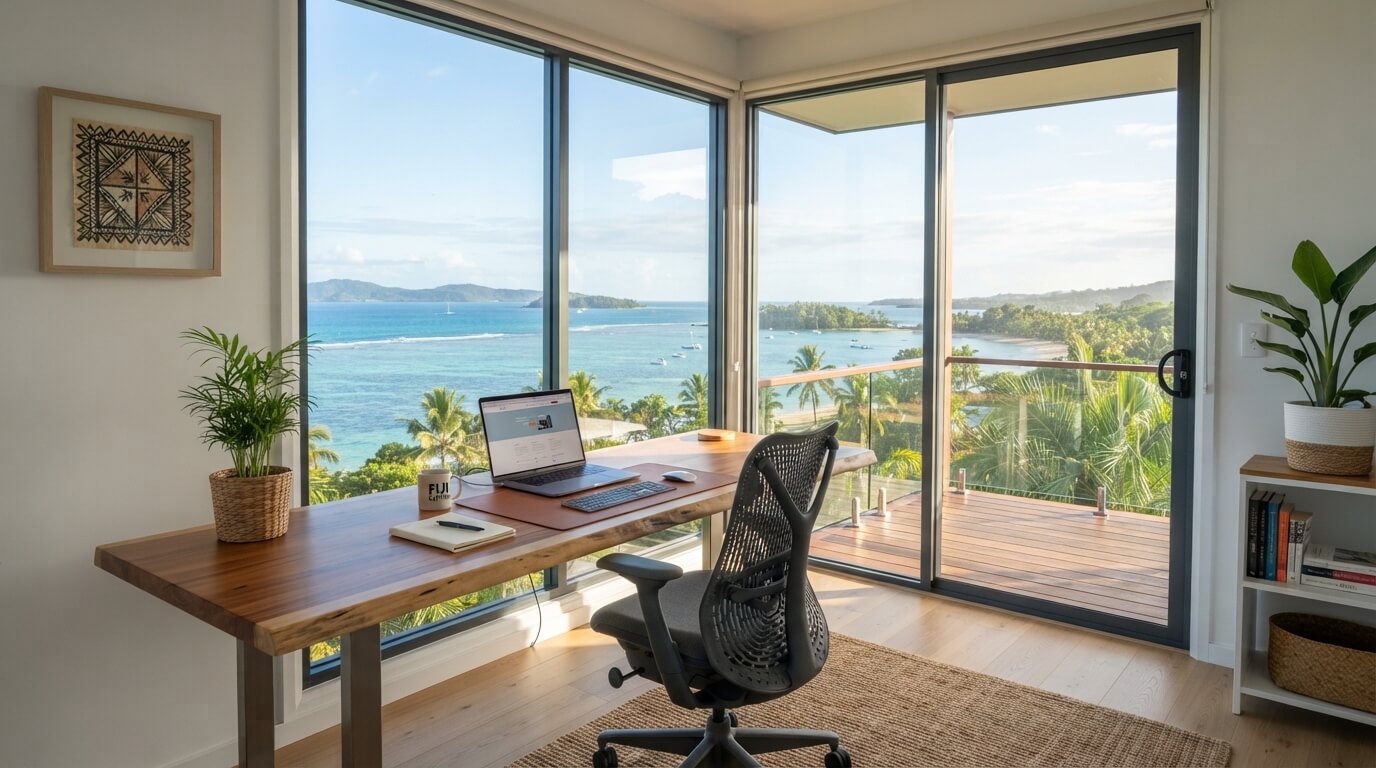
Fiji's bright tropical sunlight is a valuable resource when used correctly. Position your desk so windows are to your side rather than directly behind or in front of your screen. This arrangement reduces glare while still allowing daylight to illuminate your workspace.
Cross-ventilation matters in warm climates. If your room has multiple windows or openings, arrange your furniture so air can move freely across the space. Avoid blocking windows with tall cabinets or shelving units that restrict breeze flow.
Consider the sun's path throughout the day. East-facing windows bring morning light, while west-facing ones can create afternoon heat. Adjust blinds or curtains as needed to control temperature and brightness.
3. Choose Climate-Appropriate Furniture Materials
Fiji's humidity levels often exceed 70%, which can damage certain furniture types over time. Solid wood swells and warps when exposed to moisture. Metal frames with powder-coated finishes or galvanised treatments offer better durability in coastal conditions.
Vinod Patel's Home & Living collection includes desks and chairs designed for local conditions. Moisture-resistant engineered surfaces and breathable mesh chair backs perform well in tropical environments.
Check furniture edges and joints regularly. These areas are most vulnerable to humidity damage. A thin application of sealant along seams can prevent moisture from entering composite materials.
4. Set Up an Ergonomic Desk and Chair Configuration
Your chair height affects your entire posture. Adjust the seat so your feet rest flat on the floor and your knees bend at approximately 90 degrees. If your chair cannot lower enough, use a footrest to achieve this position.
Desk height should allow your forearms to rest parallel to the floor when typing. For most adults, this means a work surface between 71 and 76 centimetres high. Standing desks with adjustable heights let you switch between sitting and standing throughout the day.
Position your monitor so the top of the screen sits at or slightly below eye level. This placement reduces neck strain from looking up or down for extended periods.
5. Create Dedicated Zones for Different Tasks
A single desk surface often becomes cluttered when it handles every activity. Designate separate areas for your computer work, paperwork, and reference materials. Even small rooms can accommodate distinct zones with thoughtful arrangement.
Place frequently used items within arm's reach of your primary work position. Store less common supplies in drawers or on shelves away from your main desk area. This approach keeps your active workspace clear.
If space allows, create a small break zone with a comfortable chair for reading or phone calls. Physical separation between work and rest areas helps your mind shift between focused and relaxed states.
6. Manage Cables and Reduce Visual Clutter
Loose cables create both visual distraction and tripping hazards. Group power cords together and route them along desk legs or wall edges using adhesive clips. Cable trays that attach under your desk surface hide wires from view.
Label each cable near its connection point. When you need to disconnect equipment for cleaning or rearranging, labels eliminate guesswork about which cord belongs to which device.
Reduce the number of items on your desk surface to those you use daily. Store extra stationery, documents, and supplies in drawers or closed storage units. Vinod Patel offers writing desks with built-in drawers that keep essentials organised and accessible.
7. Add Ventilation and Cooling Solutions
Fiji's warm climate requires active air management in enclosed spaces. Position a fan or air circulation unit to move air across your workspace without blowing directly onto papers or your face. Oscillating fans distribute airflow evenly throughout the room.
If your home office lacks windows, consider a portable dehumidifier to reduce moisture levels. Keeping relative humidity between 40% and 60% protects both your health and your furniture from mould growth.
WIND Louvre Frames allow fresh air into your space while maintaining an outdoor view. These ventilation solutions help reduce reliance on air conditioning, which can lower energy costs over time.
What Is the Best Desk Position for Natural Light in Fiji?
The ideal desk position places your screen perpendicular to windows, with natural light coming from your left or right side. This configuration prevents glare on your monitor while still benefiting from daylight.
Avoid facing windows directly, as the bright background creates eye strain when looking at your screen. Similarly, having windows behind you causes reflections on your monitor that make text difficult to read.
In Fiji, where sunlight is intense year-round, adjustable blinds or light-filtering curtains give you control over brightness levels. You can open them fully on overcast days and partially close them during peak afternoon sun.
How Does Humidity Affect Home Office Furniture in Fiji?
High humidity causes porous materials like untreated wood to absorb moisture from the air. Over time, this absorption leads to swelling, warping, and potential structural failure. Joints and edges are particularly vulnerable areas.
Engineered wood products with sealed surfaces resist humidity better than solid timber. Metal furniture with protective coatings also performs well in coastal environments. Mesh chair backs allow air circulation and dry quickly after exposure to moisture.
Regular maintenance extends furniture lifespan in tropical climates. Wipe down surfaces with a dry cloth weekly, and inspect edges for signs of peeling or bubbling that indicate moisture damage.
How Vinod Patel Helps You Create the Perfect Home Office
Vinod Patel gives Fijian homeowners access to quality furniture designed for tropical living. The Home & Living division stocks desks, chairs, and storage solutions that withstand local conditions while supporting proper ergonomics.
From L-shaped workstations for multi-monitor setups to ergonomic office chairs with breathable mesh backs, the range addresses every home office need. Electronics and appliances for ventilation and cooling complete your workspace setup.
Flexible payment options through Finance Hub make upgrading your home office accessible. Visit your nearest Vinod Patel store or browse the online catalogue to find furniture that transforms your remote work experience.
FAQs About Home Office Furniture Layout in Fiji
How far should my desk be from the wall in a Fiji home office?
Leave at least 20 millimetres between your desk and walls to allow air circulation. This gap prevents moisture buildup behind equipment and furniture, which is important in Fiji's humid climate. Vinod Patel's furniture range includes compact options that fit well in smaller spaces while maintaining proper clearance.
What chair height is correct for most desks?
Your chair should position your elbows at a 90-degree angle when typing. For standard 75-centimetre desk heights, this typically means a seat height between 40 and 50 centimetres. Adjustable chairs let you find the exact position that suits your body.
Can I use regular furniture for a home office in Fiji?
Standard furniture may deteriorate faster in tropical conditions. Dining chairs lack lumbar support for extended sitting, and untreated wood surfaces can warp within months. Vinod Patel stocks office-specific furniture built with moisture-resistant materials suited to Fiji's climate.
How often should I rearrange my home office layout?
Review your setup every three to six months, or whenever you notice discomfort or reduced productivity. Seasonal changes in sun angle and humidity levels may require adjustments to desk position and ventilation placement.
What is the best flooring for a home office in Fiji?
Tile or vinyl flooring handles humidity better than carpet, which can trap moisture and harbour mould. A rug under your desk adds comfort without the moisture risks of wall-to-wall carpeting. Vinod Patel's home decor selection includes area rugs that complement office furniture.